


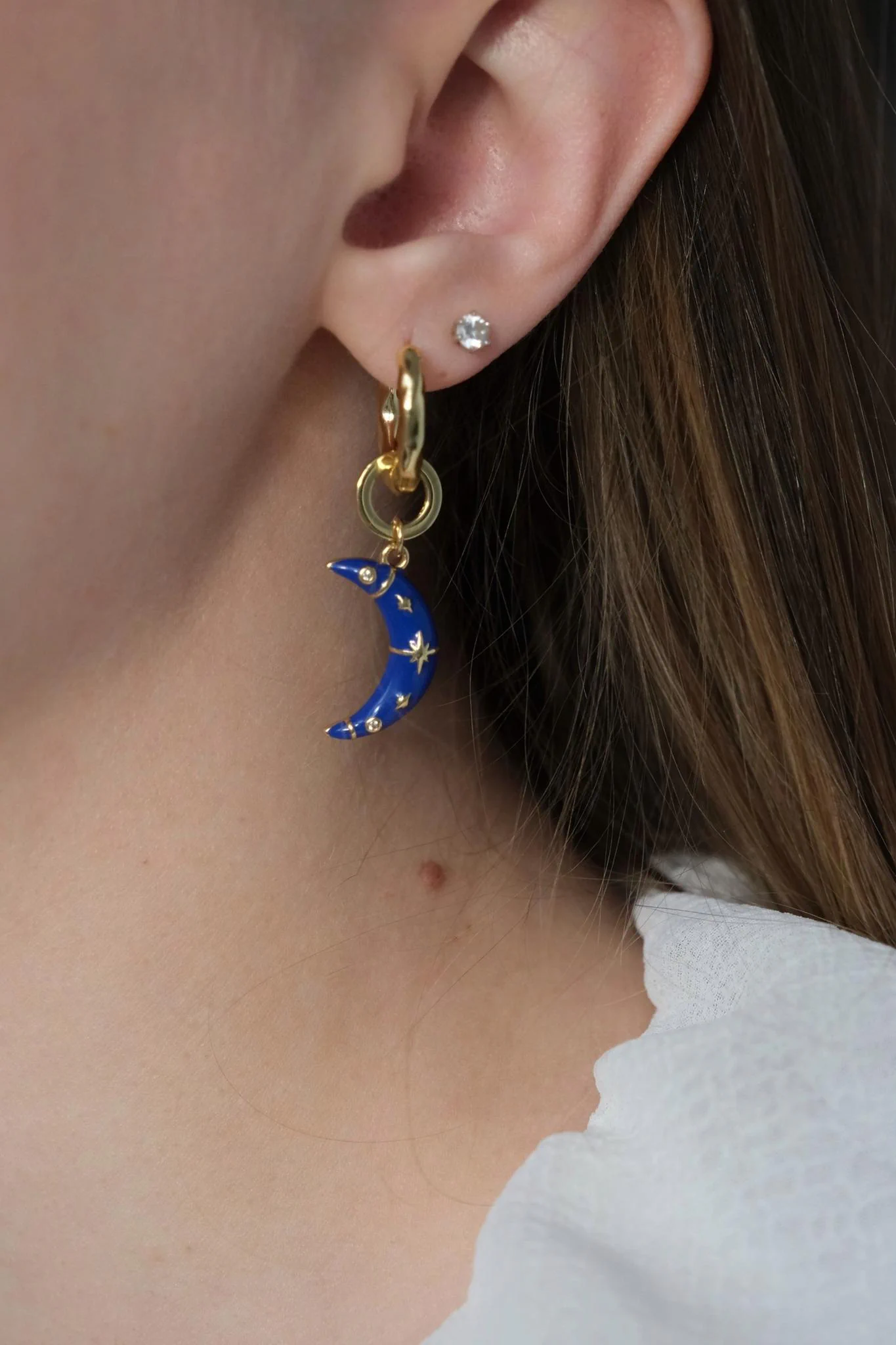
A piece of jewellery can begin to feel personal before you even try it on. Its shape recalls a familiar place, its shade brings back a favourite season, or a small star reminds you of a long conversation on a balcony. Those associations need no universal explanation. Follow your own response and consider a piece you would enjoy wearing on ordinary days, allowing its meaning to become part of everyday life.
Begin with what you noticed first
Look at the piece and name one detail that caught your attention: colour, curve, pattern or size. With Indigo Moon, it might be the blue enamel, the stars or the extended crescent. Describe the impression in your own words before reading other people's stories about similar symbols.
You could write a short phrase: an evening by the sea, a favourite dark shirt, the sky outside a window. The association can be very ordinary. If no memory comes to mind, enjoying the shape and colour is enough. Personal meaning may develop later, through wearing it.
Let the memory be your own
The same moon can mean different things to different people. It may recall a journey for one person and an illustration in a childhood book for another. There is no need to find one correct interpretation. Your relationship with the object can grow from particular events, habits and observations.
Consider whether you would like to share the story. Jewellery can start a conversation, or remain a private detail. The same piece allows either possibility. What matters is feeling a connection to the image without needing to explain it every time somebody notices what you are wearing.

Choose where the symbol will sit
A shape looks different near an ear and along a neckline. An earring charm moves as you turn your head; on a necklace, it occupies another position against your clothes. Think about familiar collars, the length of your hair and how visible you would like the detail to be.
Indigo Moon is described as a charm for interchangeable earrings, chokers and necklaces. Check its fastening against the particular base you choose, including the connection size and how it closes. A styled photograph helps you imagine the result, while the product description explains what is included in the purchase.
Give the colour a simple setting
A plain top is a useful starting point for a blue symbol. Against pale fabric, the outline is easy to see; beside a darker shade, the small lighter details may draw your attention. Compare both in the mirror and choose the setting in which you most enjoy the jewellery.
Later, add another connection: a blue detail in a scarf, a small hair clip or a related bag colour. You can also leave the charm as the only item in that shade. Repetition connects the pieces, while open space around the moon gives its shape and stars room to show.
Allow the story to continue
Choose an ordinary day for the first outing. Walking for coffee, visiting friends or reading in a park can also become part of a memory. A personal object gains character through repeated small experiences, so there is no need to wait for a specially planned occasion to begin wearing it.
If you enjoy keeping these details, take a photograph and note the place or your mood. Months later, it can be interesting to see the outfits and days that accompanied the piece. Its meaning may change with you while the familiar symbol remains a small, welcome point of recognition.
Comments
Questions, observations and useful additions from readers.
New and edited comments appear after moderation.
Start the conversation
Be the first reader to leave a thoughtful comment.